Air embolism & In-line IV filters: key insights


Air Embolism & IV Filters: Key Insights
Air embolism is a preventable hospital-acquired condition (HAC) that can result in serious harm, including death.1-3 HAC is a medical diagnoses a patient can develop during a hospital stay that was not present on admission.3 In 2008, a provision of the Deficit Reduction Act of 2005 known as Medicare “Nonpayment” went into effect, eliminating reimbursement for the marginal costs of preventable HACs, including air embolism.4
Therefore, preventing the entrance of air into the patient’s circulatory system can result in tangible budget savings for healthcare providers. Incidences with vascular air embolism (VAE), when one or more air bubbles enter a vein and block it, costs the healthcare system, on average, $66,007 per incident.5-8
Within the hospital environment there are multiple ways air may enter the venous circulation, such as surgical procedures, pain management procedures, diagnostic procedures, hemoperfusion and air from intravenous infusion therapy.9 Regarding VAE, central venous catheters (CVC) warrants special attention. Approximately eight percent of hospitalized patients require central venous access, e.g. more than five million CVCs are inserted in the United States each year.10,11
Estimates of the frequency of VAE related to CVCs vary from study to study and are reported to range from 1 in 47 to 1 in 3000 catheterization events or from 0.1% to 2% per patient.10,12-14 According to a Pennsylvania Patient Safety Authority report 41% of VAEs are associated with central venous access devices.15
While the frequency of VAE associated with CVCs may be low, mortality rates range from 23% to 50%.2,16,17
Technical measures, such as the use of an air-eliminating filter, play a crucial role for healthcare providers to prevent VAE. In this respect, the Infusion Nurses Society and the American Society for Parenteral and Enteral Nutrition are recommending in-line filtration as a preventive strategy to mitigate the risk of air embolism.18,19
In 2021 the INS states the following regarding the use of in-line IV filters:
- “Consider filtration of solutions and medications to reduce microbubbles (<1 mm in diameter) of air entrained in infusion solutions and medications.”
- “Use air-eliminating filters for infusion in all patients with a medical diagnosis involving right-to-left cardiac or pulmonary shunting to prevent air and particulate matter from reaching the arterial circulation, also known as paradoxical embolization.”18
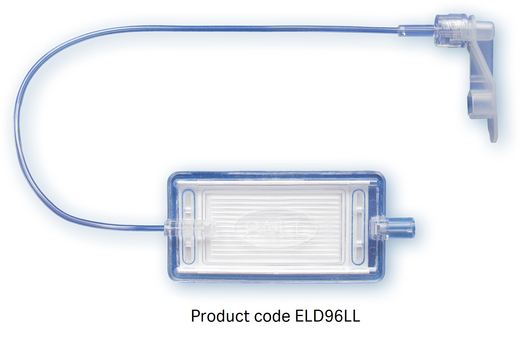
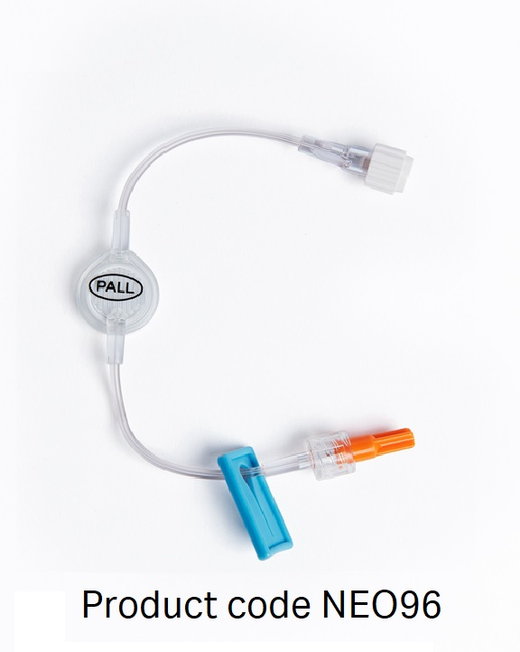
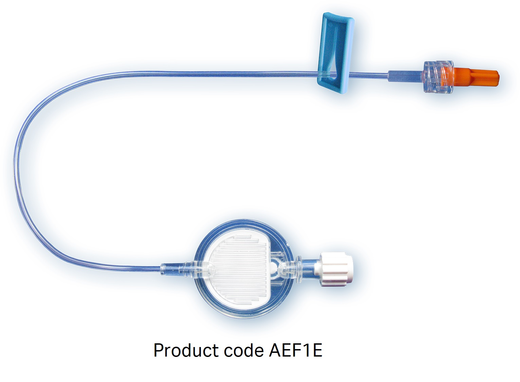
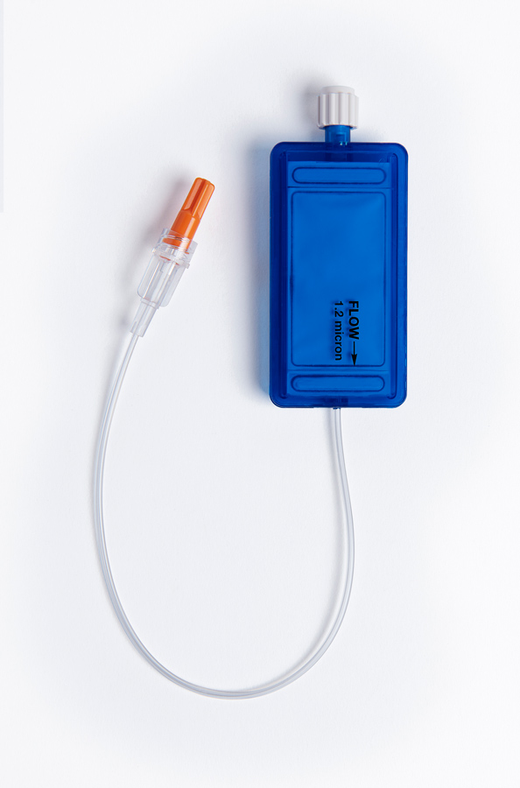
Explore our IV air eliminating solutions
References
- Myers G.J. (2017). Air in intravenous lines: a need to review old opinion. Perfusion; 32(6): 432-435
- Feil M. (2012). Reducing Risk of Air Embolism Associated with Central Venous Access Devices. Pennsylvania Patient Safety
Authority; 9 (2): 58-65 - Center for Medicare and Medicaid Services. (2020). Publicly Reported DRA HAC Measures - Frequently Asked Questions from
https://www.cms.gov/files/document/frequently-asked-questions-publicly-reported-deficit-reduction-act-dra-hospital-acquiredcondition. Pdf [accessed 02/23/2021] - Kornkven A. (2020). The Impact of Medicare Nonpayment: A Quasi-Experimental Approach from
https://sites.duke.edu/djepapers/files/2020/06/audreykornkven-dje.pdf [accessed 02/23/2021] - Rowland HT. (2009). When never happens: Implications of Medicare’s never event policy. Marquette Elder’s Advi; 10: 341-82
- Bhananker S.M. et al. (2009). Liability related to peripheral venous and arterial catheterization: A closed claims analysis. Anesth
Analg; 109: 124-9 - Domino K.B. et al. (2004). Injuries and liability related to central vascular catheters: A closed claims analysis. Anesthesiology; 100:
1411-8 - Lee S., Bulsara K.R. (2020). Assessing the Efficacy of Commercially Available Filters in Removing Air Micro-Emboli in Intravenous
Infusion Systems. J Extra Corpor Technol; 52: 118-25 - Mirski M.A., Lele A.V., M.D., Fitzsimmons L., Toung T.J.K. (2007). Diagnosis and Treatment of Vascular Air Embolism.
Anesthesiology; 106: 164-177 - Kornbau C., Lee K.C., Hughes G.D., Firstenberg MS. (2015). Central line complications. Int J Crit Illn Inj Sci; 5(3): 170-178.
- Cook L.S. (2013). Infusion-Related Air Embolism. Journal of Infusion Nursing; 36 (1): 26-36
- Boersma R.S., Jie K.S., Verbon A., van Pampus E.C., Schouten H.C. (2008). Thrombotic and infectious complications of central
venous catheters in patients with hematological malignancies. Ann Oncol; 19: 433-442 - Gordy S., Rowell S. (2013). Vascular air embolism. Int J Crit Illn Inj Sci;3 (1): 73-76
- Scott W.L. (1988). Complications Associated with Central Venous Catheters: A Survey. Chest; 94 (6): 1221-1224
- Vesely T.M. (2001). Air Embolism during Insertion of Central Venous Catheters. Journal of Vascular and Interventional Radiology; 12 (11): 1291-1295
- Feil M. (2015). Preventing central line air embolism. Am J Nurs; 115 (6): 64-9.
- Heckmann J.G. et al. (2000). Neurologic manifestations of cerebral air embolism as a complication of central venous catheterization. Crit Care Med; 28(5): 1621-5
- Kashuk J.L., Penn I. (1984). Air embolism after central venous catheterization. Surg Gynecol Obstet; 159: 249-52
- Gorski L.A. et al. (2021). Infusion Therapy Standards of Practice, 8th Edition. J Infus Nurs; 01(44): S1-S224
- Ayers P. et al. (2014) A.S.P.E.N. Parenteral Nutrition Safety Consensus Recommendations. Journal of Parenteral and Enteral Nutrition; 38 (3): 296-333
- Giblett J.P., Abdul-Samad O., Shapiro L.M., Rana B.S., Calvert P.A.(2019). Patent Foramen Ovale Closure in 2019. Interv
Cardiol;14(1): 34-41.
Need expert help with medical filtration? We can assist you!
Share your needs and our specialists will deliver tailored solutions.
*Products displayed on this website may not hold regulatory approval, authorisation, or clearance in all countries, and their availability is subject to regional regulatory requirements. For local office contact information, visit our contact page
Our in-line IV filters