Critical focus: paradoxical embolism

SUMMARY
- Paradoxical embolism (PDE) occurs when a thrombus or other material (e.g., fat, amniotic fluid, tumor, or air) crosses an intracardiac defect such as Patent Foramen Ovale (PFO).
- Paradoxical embolism is strongly associated with arterial air embolization, as demonstrated by reports showing 40% of cerebral air embolism cases had a PFO, and INS (Infusion Nursing Society) guidelines recommend the use of air-eliminating IV filters to reduce this risk in patients with right-to-left shunts.
What is paradoxical embolism?
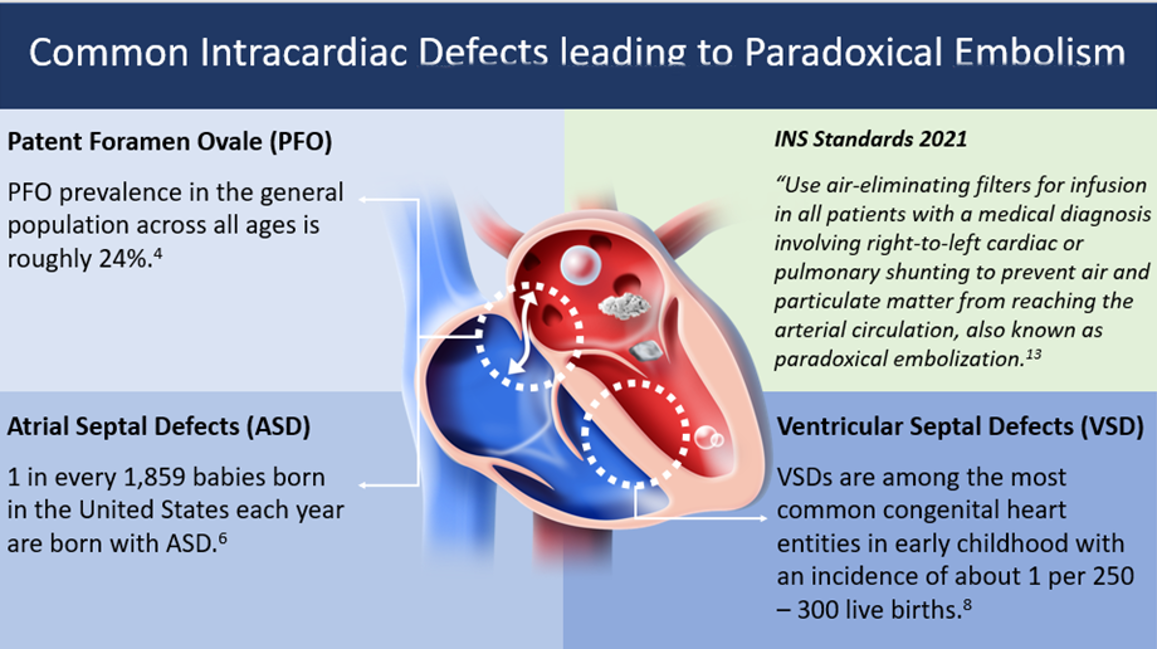
Paradoxical Embolism (PDE) occurs when a thrombus crosses an intracardiac defect into the systemic circulation. The emboli is usually a blood clot but maybe also a fat particle, amniotic fluid, tumor or air.1
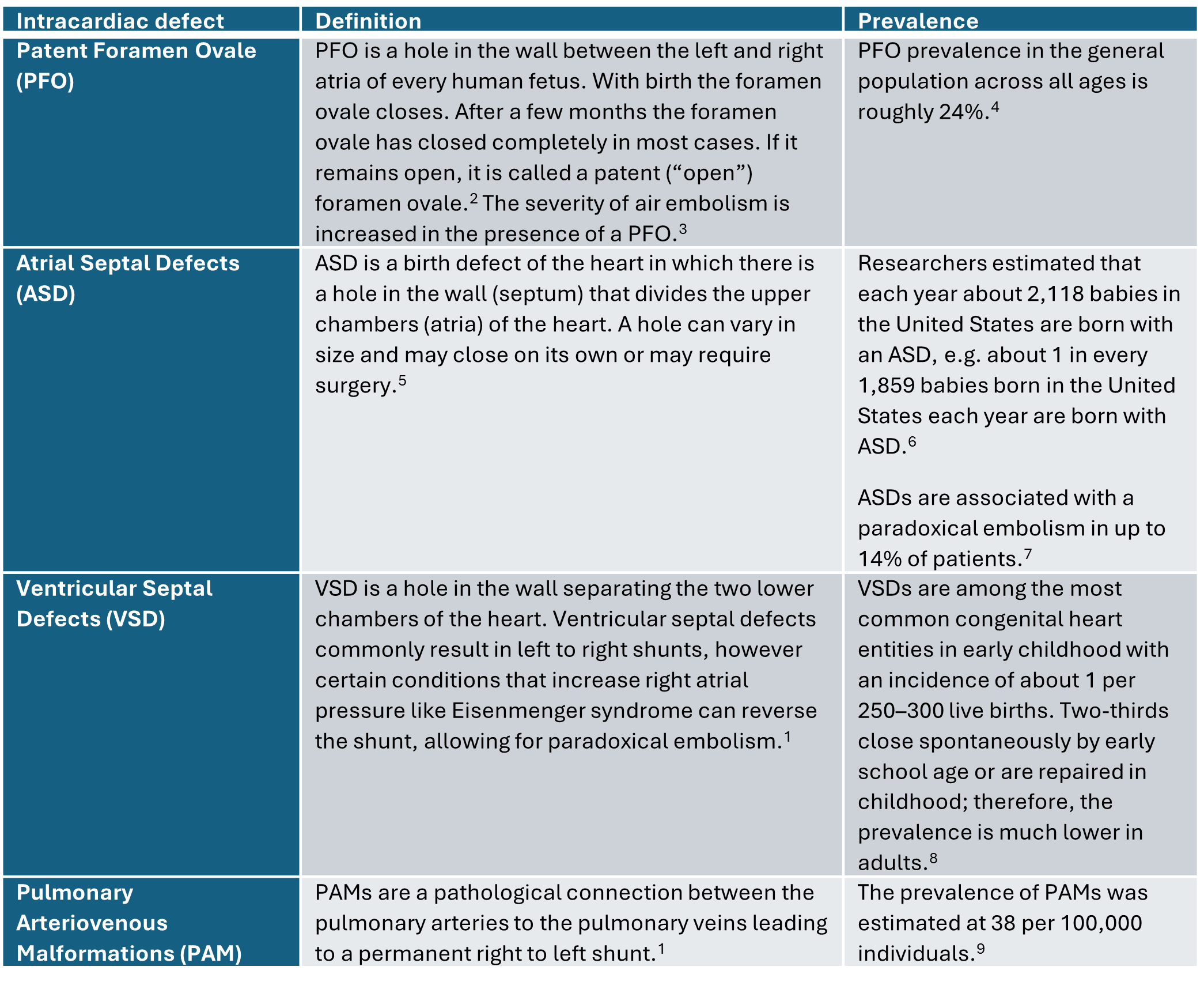
There are four intracardiac defects. These are the Patent Foramen Ovale (PFO), Atrial Septal Defects (ASD), Ventricular Septal Defects (VSD) and Pulmonary Arteriovenous Malformations (PAM).
Especially the presence of a PFO is related to arterial air embolization following intravenous air.10 Heckmann reported a PFO in 40% of cases with cerebral air embolism in association with air as a complication of central venous cannulation.11 Patent foramen ovale (PFO) is a common abnormality affecting between 20% and 34% of the adult population.12
US guidelines recommend IV filtration to mitigate the risk of Paradoxical Embolism
In 2021 the Infusion Nurses Society states:
“Use air-eliminating filters for infusion in all patients with a medical diagnosis involving right-to-left cardiac or pulmonary shunting to prevent air and particulate matter from reaching the arterial circulation, also known as paradoxical embolization. Hypercoagulable states and increased right heart pressure are associated with increased risk of paradoxical embolization.”13
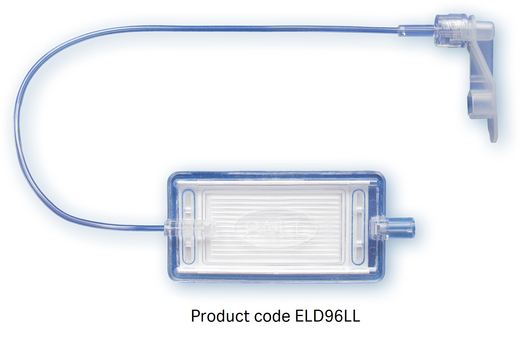
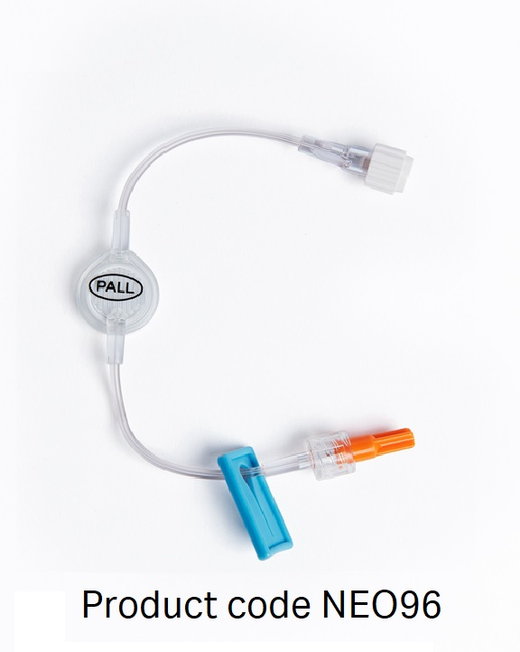
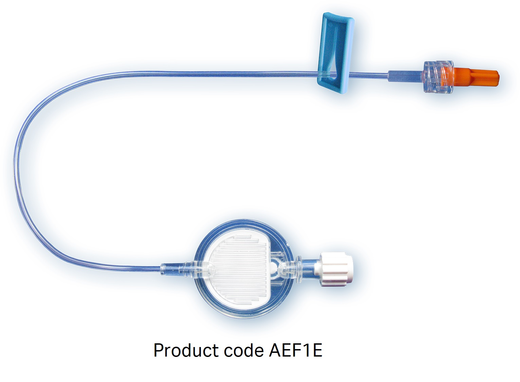
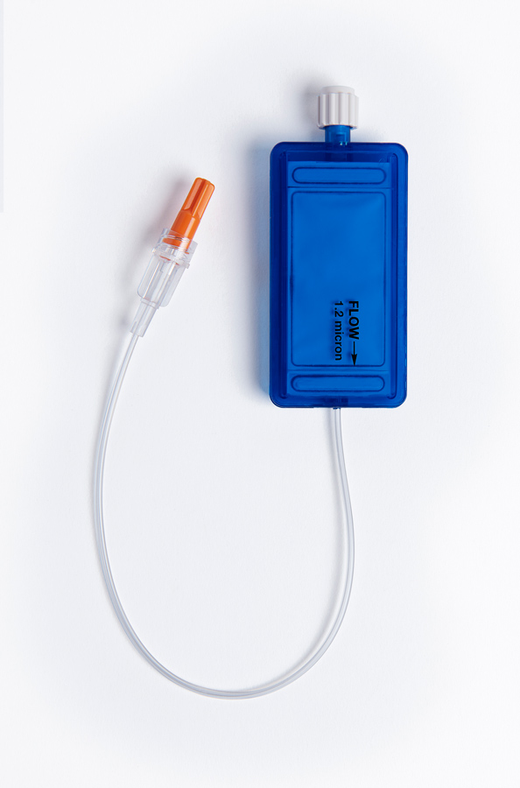
Explore our IV air eliminating solutions
FAQs
Which intracardiac defects are linked to paradoxical embolism?
Patent Foramen Ovale (PFO), Atrial Septal Defects (ASD), Ventricular Septal Defects (VSD), and Pulmonary Arteriovenous Malformations (PAM).1
How common is PFO in adults?
PFO affects between 20% and 34% of the adult population. 12
Why is PFO significant for air embolism risk?
PFO allows air bubbles from IV infusions to bypass the lungs and enter arterial circulation, increasing the risk of cerebral air embolism. 10-11
What do INS guidelines recommend for high-risk patients?
Use air-eliminating IV filters for patients with right-to-left shunts to prevent air and particulate matter from reaching arterial circulation. 13
References
- Available from: https://www.ncbi.nlm.nih.gov/books/NBK470196/
- American Heart Association (2021). Patent Foramen Ovale (PFO). [Updated 2017 March 31]. Available from: https://www.heart.org/en/health-topics/congenital-heart-defects/about-congenital-heart-defects/patent-foramen-ovale-pfo
- Cook L.S. (2013). Infusion-Related Air Embolism. Journal of Infusion Nursing; 36 (1): 26-36
- Koutroulou I. et al. (2020). Epidemiology of Patent Foramen Ovale in General Population and in Stroke Patients: A Narrative Review. Front Neurol; 11 (281)
- CDC (2021). Facts about Atrial Septal Defect. [Updated 2020 November 17]. Available from: https://www.cdc.gov/ncbddd/heartdefects/atrialseptaldefect.html
- Mai C.T. et al. (2019). National population-based estimates for major birth defects, 2010-2014. Birth Defects Res; 111 (18): 1420-1435
- Bannan A., Shen R., Silvestry F.E., Herrmann H.C. (2009). Characteristics of adult patients with atrial septal defects presenting with paradoxical embolism. Catheter Cardiovasc Interv; 74(7): 1066-9
- Kochav J. (2018) Ventricular Septal Defect. In: DeFaria Yeh D., Bhatt A. (eds) Adult Congenital Heart Disease in Clinical Practice. In Clinical Practice. Springer, Cham. https://doi.org/10.1007/978-3-319-67420-9_5
- Nakayama M. et al. (2012). Prevalence of pulmonary arteriovenous malformations as estimated by low-dose thoracic CT screening. Intern Med; 51 (13): 1677-81
- Wilkins R.G., Unverdorben M. (2012). Intravenous Infusion of Air. Journal of Infusion Nursing; 35 (6): 404-408
- Heckmann J.G. et al. (2000). Neurologic manifestations of cerebral air embolism as a complication of central venous catheterization. Crit Care Med; 28 (5): 1621-1625
- Giblett J.P., Abdul-Samad O., Shapiro L.M., Rana B.S., Calvert P.A. (2019). Patent Foramen Ovale Closure in 2019. Interv Cardiol;14 (1): 34-41
- Gorski L.A. et al. (2021). Infusion Therapy Standards of Practice, 8th Edition. J Infus Nurs; 01(44): S1-S224
Author bio
Dr. Luibl is a Sr. Marketing Manager Medical Content with knowledge in medical device and clinical science.
Need expert help with medical filtration? We can assist you!
Share your needs and our specialists will deliver tailored solutions.
Our in-line IV filters