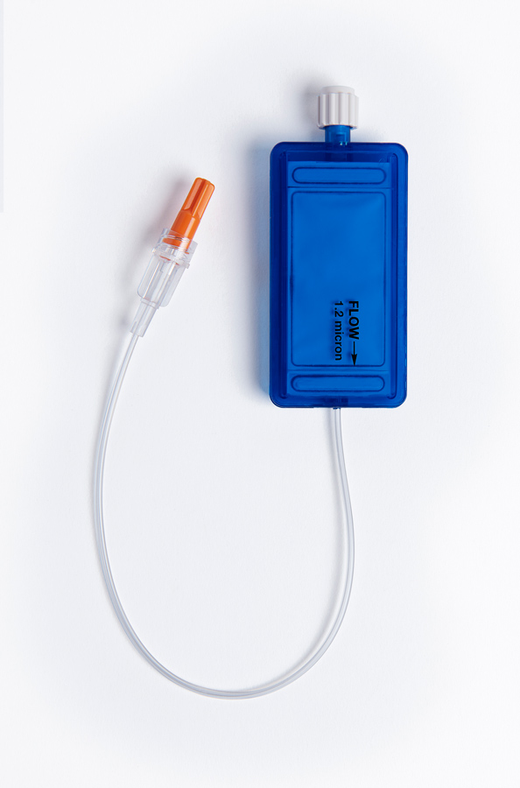
Essential guidelines recommending particle-retentive filters

SUMMARY:
In recent years, several professional societies - have published recommendations on the use of in‑line IV filters.
Particulates were the main concerns and drivers for the recommendations across the societies. With the majority recommending 0.2 µm and/or 1.2 µm in-line IV filters. This is a summary of the guidelines for particle retentive filters.
| Society | Country | Year | Statement |
| INS | USA | 2022 | Reduce particulate matter in critically ill patients that can cause thrombogenesis, impaired microcirculation, and alter immune response. Use a 1.2-micron filter for all PN solutions including PN solutions with lipids [“total nutrient admixtures” (TNA)], dextrose-amino acid admixtures, and lipid injectable emulsions. |
| ASPEN | USA | 2020 | In-line intravenous filters serve a critical purpose in reducing exposure to particulate matterduring PN therapy. Based on best available evidence and guidance from scientific and regulatory agencies, ASPEN recommends using a1.2 micron in-line filterfor administration of TNAs, dextrose-amino acid admixtures and ILE. |
| IRSPEN | Ireland | 2020 | The IRSPEN states that PN solutions may contain particulate matter and biochemical interactions can result in chemical precipitations in addition to the risk of bacterial contamination. It is recommended that all PN solutions are administered via an infusion set containing a terminal filter. A 1.2-to-1.5-micron filter is recommended for 3-in-1 admixtures. |
| HAS | France | 2018 | The HAS recommends using antibacterial (0.22 µm) and particulate (1.2 µm) in-line filters. |
| ESPGHAN, ESPEN, ESPR, CSPEN | China & Europe | 2018 | PN solutions contain particulate matter, and biochemical interactions can lead to chemical precipitates and emulsion instability. PN solutions may be administered through a terminal filter: lipid emulsions (or all-in-one mixes) can be passed through a membrane pore size of 1.2 - 1.5 µm. Aqueous solutions can be passed through a 0.22 µm filter. |
| KRINKO | Germany | 2017 | Particle filters should be used for intensive care patients in the infusion system (air separation,less systemic inflammatory response reaction). |
| JSPEN | Japan | 2013 | IV in-line filters not only trap microorganisms but also capture foreign substances such as glass pieces and sediments caused by changes in formulation and have the effect of preventing air embolism. |
| BPNG | UK | 2001 | Appropriate filters should be used during the administration of PN to patients who require intensive or prolonged parenteral therapy, the immunocompromised, neonates and children, and patients receiving home PN because of the large volume of potentially particulate-contaminated fluid administered and their increased susceptibility to the detrimental effects of particulate contamination. |
References
- 2021 Infusion Therapy Standards of Practice Updates. J Infus Nurs. 2021 Jul-Aug 01;44(4):189-190.
- Worthington P, Gura KM, Kraft MD, Nishikawa R, Guenter P, Sacks GS. et al. Update on the Use of Filters for Parenteral Nutrition: An ASPEN Position Paper. Nutr Clin Pract. 2021; 36(1):29-39. doi.10.1002/ncp.10587.
- Irish Society for Clinical Nutrition & Metabolism. 2020. Guideline on the Use of Parenteral Nutrition in Neonatal and Paediatric Units. Revision date: 2023 Jul. Version 2.0. Guideline no. CSPD001/2017. https://www.hse.ie/eng/about/who/cspd/ncps/paediatrics-neonatology/resources/guideline-on-the-use-of-parenteral-nutrition-in-neonatal-and-paediatric-units.pdf
- Haute Autorité de Santé. Recommandation de bonne pratique. Nutrition parentérale en néonatologie. French. 2018 Apr 4. https://www.has-sante.fr/jcms/c_2859140/en/nutrition-parenterale-en-neonatologie-recommandation-de-bonne-pratique
- Puntis JWL, Hojsak I, Kziazyk J, ESPGHAN/ESPEN/ESPR/CSPEN working group on pediatric parenteral nutrition. ESPGHAN/ESPEN/ESPR/CSPEN guidelines on pediatric parenteral nutrition: Organisational aspects. Clin Nutr. 2018;37(6 Pt B):2392-2400. doi:10.1016/j.clnu.2018.06.953.
- Prävention von Infektionen, die von Gefäßkathetern ausgehen: Teil 1 – Nichtgetunnelte zentralvenöse Katheter Empfehlung der Kommission für Krankenhaushygiene und Infektionsprävention (KRINKO) beim Robert Koch-Institut. Bundesgesundheitsblatt Gesundheitsforschung Gesundheitsschutz. 2017 Feb;60(2):171-206. German.
- Japanese Society for Clinical Nutrition and Metabolism. 2013. Japanese.
- Inoue Y. The Japanese Journal of Surgical Metabolism and Nutrition. 2008;42:11-18.
- Inoue Y. et al. The Japanese Journal of Surgical Metabolism and Nutrition. 2006;40:229-237.
- Bethune K, Allwood M, Grainger C, Wormleighton C, British Pharmaceutical Nutrition Group Working Party. Use of filters during the preparation and administration of parenteral nutrition: position paper and guidelines prepared by a British pharmaceutical nutrition group working party. Nutrition. 2001;17(5):403-408. doi:10.1016/s0899-9007(01)00536-6.
Need expert help with medical filtration? We can assist you!
Share your needs and our specialists will deliver tailored solutions.
Our in-line IV filters
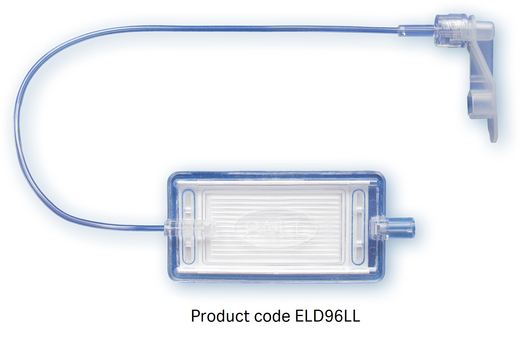
Posidyne® ELD intravenous filter
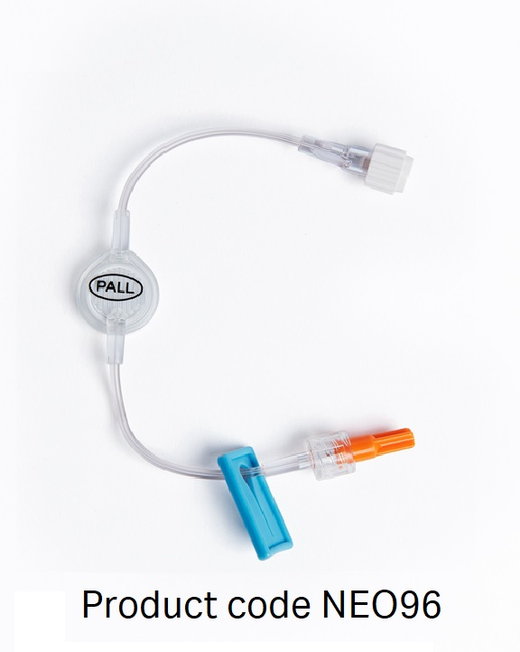
Posidyne® NEO intravenous filter
Supor™ AEF low protein binding intravenous filters
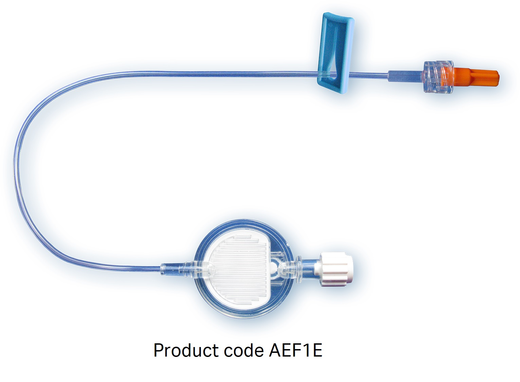
Total Nutrient Admixture (TNA) filter