Pathology and clinical insights on vascular air embolism

SUMMARY
Vascular air embolism (VAE) is a well known risk in clinical practice. Morbidity and mortality from VAE depends on volume of air entrainment and rate of accumulation.
What are the pathology and clinical insights on vascular air embolism?
Basically, there are two crucial factors that determine the morbidity and mortality of vascular air embolism (VAE):
- The volume of air entrainment
- The rate of accumulation1
How much air is lethal?
Animal studies demonstrated that approximately 0.5– 0.75 ml/kg in rabbits and 7.5–15.0 ml/kg in dogs are lethal.2-4
Case reports of accidental intravascular delivery of air described the lethal volume as between 200 and 300 ml, or 3–5 ml/kg.5,6
Other case reports have demonstrated that 20 mL or less of rapid air intake may result in fatal embolism.7
In general, air volume greater than 50 mL is considered potentially lethal.8
Clinical presentation of air embolism
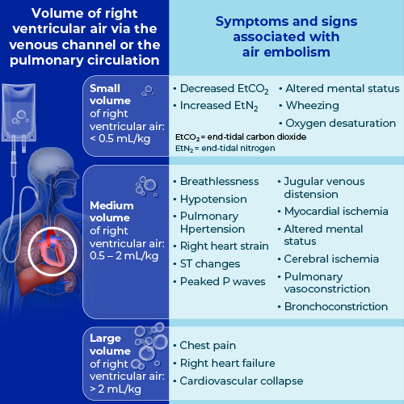
VAE may have cardiovascular, pulmonary, and neurologic effects, dependent on the rate and entrained volume of air.1 Rapid bolus injection may result in precipitous cardiovascular collapse, whereas gradual accumulations (microbubbles) may go unnoticed.8 Figure 1 illustrates the relation between acute embolism volume and clinical symptoms and signs.
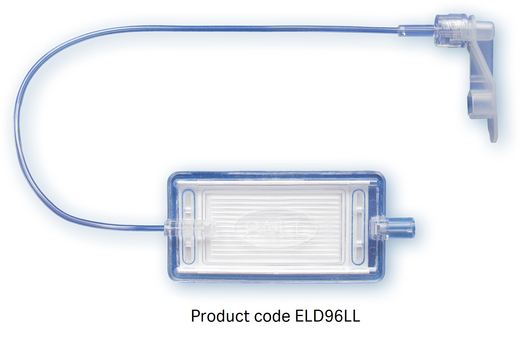
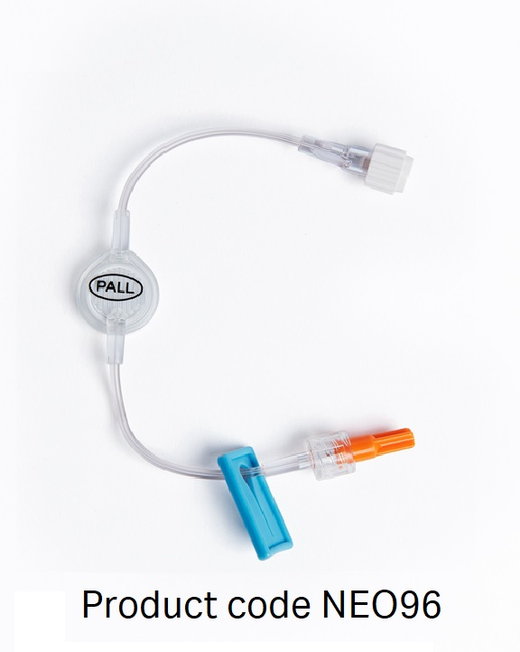
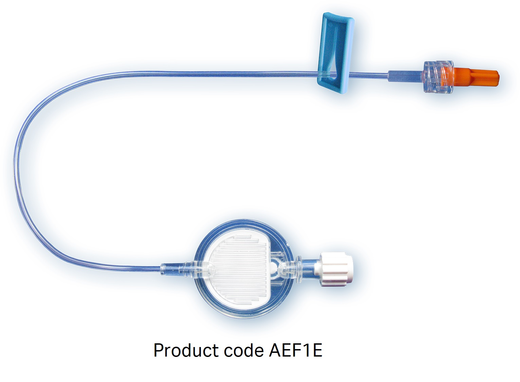
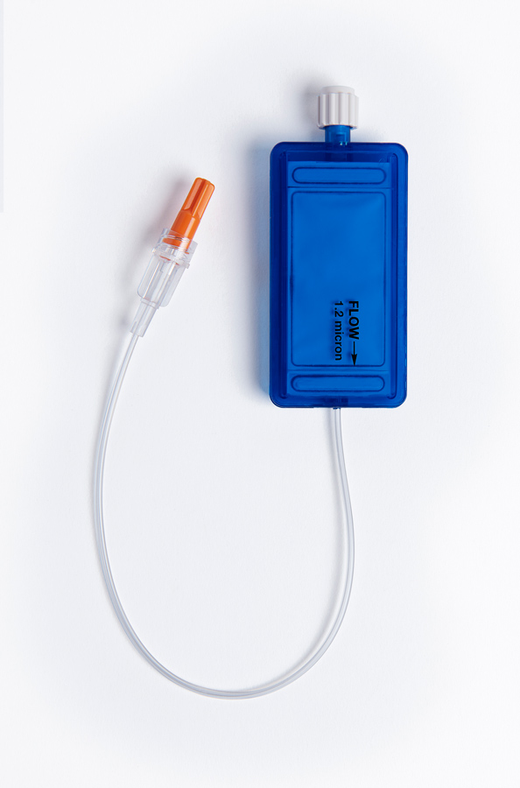
Explore our IV air eliminating solutions
References
- Hakman E.N., Cowling K.M. (2021). Paradoxical Embolism. [Updated 2020 Sep 9]. In: StatPearls [Internet]. Treasure Island (FL): StatPearls. Available from: https://www.ncbi.nlm.nih.gov/books/NBK470196/
- American Heart Association (2021). Patent Foramen Ovale (PFO). [Updated 2017 March 31]. Available from: https://www.heart.org/en/health-topics/congenital-heart-defects/about-congenital-heart-defects/patent-foramen-ovale-pfo
- Cook L.S. (2013). Infusion-Related Air Embolism. Journal of Infusion Nursing; 36 (1): 26-36
- Koutroulou I. et al. (2020). Epidemiology of Patent Foramen Ovale in General Population and in Stroke Patients: A Narrative Review. Front Neurol; 11 (281)
- CDC (2021). Facts about Atrial Septal Defect. [Updated 2020 November 17]. Available from: https://www.cdc.gov/ncbddd/heartdefects/atrialseptaldefect.html
- Mai C.T. et al. (2019). National population-based estimates for major birth defects, 2010-2014. Birth Defects Res; 111 (18): 1420-1435
- Bannan A., Shen R., Silvestry F.E., Herrmann H.C. (2009). Characteristics of adult patients with atrial septal defects presenting with paradoxical embolism. Catheter Cardiovasc Interv; 74(7): 1066-9
- Kochav J. (2018) Ventricular Septal Defect. In: DeFaria Yeh D., Bhatt A. (eds) Adult Congenital Heart Disease in Clinical Practice. In Clinical Practice. Springer, Cham. https://doi.org/10.1007/978-3-319-67420-9_5
- Nakayama M. et al. (2012). Prevalence of pulmonary arteriovenous malformations as estimated by low-dose thoracic CT screening. Intern Med; 51 (13): 1677-81
- Wilkins R.G., Unverdorben M. (2012). Intravenous Infusion of Air. Journal of Infusion Nursing; 35 (6): 404-408
- Heckmann J.G. et al. (2000). Neurologic manifestations of cerebral air embolism as a complication of central venous catheterization. Crit Care Med; 28 (5): 1621-1625
- Giblett J.P., Abdul-Samad O., Shapiro L.M., Rana B.S., Calvert P.A. (2019). Patent Foramen Ovale Closure in 2019. Interv Cardiol;14 (1): 34-41
- Gorski L.A. et al. (2021). Infusion Therapy Standards of Practice, 8th Edition. J Infus Nurs; 01(44): S1-S224
Author bio
Dr. Luibl is a Sr. Marketing Manager Medical Content with knowledge in medical device and clinical science.
Need expert help with medical filtration? We can assist you!
Share your needs and our specialists will deliver tailored solutions.
Our in-line IV filters