Surgical smoke legislation continues

SUMMARY:
Surgical smoke legislation is gaining momentum in the USA, with nine states in the USA now requiring smoke-free operating rooms. Surgical smoke, produced by energy-generating devices during procedures, poses serious health risks, equivalent to inhaling 27–30 unfiltered cigarettes daily. The Lapraroshield Plus offers an effective solution, removing viruses, bacteria, particles, and volatile chemicals to protect surgical teams and maintain a safe environment.
Nine states are now surgical smoke free!
Arizona, Colorado, Connecticut, Georgia, Illinois, Kentucky, Oregon, Rhode Island, and Washington have all joined the race to a safer environment for the surgical staff.
Additionally, surgical smoke bills have been proposed in New York, New Jersey, Utah, Iowa, Missouri, Ohio, West Virginia, and Pennsylvania.
Did you know?
The average daily impact of surgical smoke to the OR team is equivalent to inhaling the smoke of 27-30 unfiltered cigarettes! 1
During surgical procedures, smoke is produced when energy generating devices such as lasers or electrosurgical units also known as cautery are used to stop bleeding or incise tissue. The energy generating devices raise the intracellular temperature to boiling (i.e., 100°C /212°F). At these high temperatures, the tissue vaporizes producing surgical smoke. 2
How can I protect my staff?
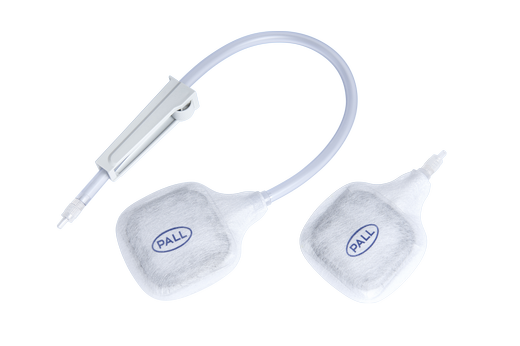
The LaparoshieldTM Plus has been designed to remove viruses, bacteria, particles, and volatile chemicals with high efficiency and is an easy to implement barrier to contamination originating from surgical smoke.
Explore our surgical smoke solutions
FAQs
Which states have adopted surgical smoke-free legislation?
Arizona, Colorado, Connecticut, Georgia, Illinois, Kentucky, Oregon, Rhode Island, and Washington. 1
What is the health impact of surgical smoke on OR staff?
Daily exposure is equivalent to inhaling the smoke of 27–30 unfiltered cigarettes. 1
How is surgical smoke generated during procedures?
It occurs when energy-generating devices like lasers or electrosurgical units vaporize tissue at high temperatures. 2
What risks does surgical smoke pose?
It contains harmful particles, bacteria, viruses, and volatile chemicals that can affect respiratory health and overall safety. 2
How can hospitals protect staff from surgical smoke?
Implementing the Laparoshield™ Laparoscopic Smoke Filtration System provides high-efficiency removal of contaminants from surgical smoke. 2
References
- Association of perioperative Registered Nurses (AORN). [Online]. 2022. https://www.aorn.org/government-affairs/policy-agenda/surgical-smoke-free-or.
- Centers for Disease Control and Prevention. NIOSH Science Blog. Surgical Smoke Inhalation: Dangerous Consequences for the Surgical Team. [Online]. https://blogs.cdc.gov/niosh-science-blog/2020/06/18/surgical-smoke/#:~:text=At%20high%20concentrations%20the%20smoke,rooms%20across%20the%20United%20States. [Published: 2020 June 18]. [Accessed: 16 April 2021].
Author bio
Lisa Bellidoro, Global Marketing Manager – Breathing and Cell Therapy
Lisa is part of our Marketing team covering both the Breathing and Cell Therapy industries. With knowledge in Marketing Communications, she brings insightful current industry trends.
Need expert help with medical filtration? We can assist you!
Share your needs and our specialists will deliver tailored solutions.
Our surgical gas filters