What is the ASTM F838-20 test?

SUMMARY:
ASTM F838-20 provides a standard method to evaluate the filtration efficiency of 0.2 micron filters. It uses the industry standard small bacterium Brevundimonas diminuta to challenge the filters at a concentration of 107 colony forming units (CFU) per cm2 of effective filtration area (EFA) to give a standard challenge independent of filter size.
When considering a filter for use with waterborne pathogens, it can be difficult to understand the differences in technologies so that the right filter can be chosen. From one manufacturer or technology to the next, performance can vary significantly.
An ASTM standard exists to judge the performance of a filter at 0.2 microns: ASTM F838. However, to understand the results, it is first important to know a bit about how the test works.
What does the ASTM F838 - 20 test show?
The ASTM F838 is titled “Standard Test Method for Determining Bacterial Retention of Membrane Filters Utilized for Liquid Filtration”1. It subjects a very small bacteria, Brevundimonas diminuta, to a filter at a concentration of 107 per cm2 of effective filtration area. This means that the more filtration media inside your filter, the more total Brevundimonas diminuta will be used in the test.
The number of organisms not retained by the filter are then enumerated and the log reduction of bacteria by the filter can be quantified. This is known as a microbial filter. In the case that there are zero bacteria enumerated, this is known as a sterilizing-grade filter.2
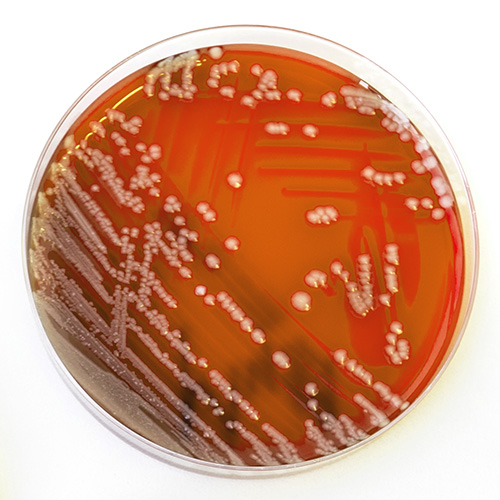
Interpreting results: Sterilizing grade vs. log reduction of bacteria
It is important to recognize that the ASTM F838 test is specifically relevant to 0.2 micron filters. If a filter claims to have a smaller pore size, for example 0.1 micron, then the filter must be validated with a different organism, often mycoplasma in this example. It is also not safe to assume that a 0.1 micron filter will retain all 0.2 micron particles or bacteria. Results depend heavily on the type and quality of the filter technology.
Therefore, when choosing a Point-of-Use Water Filter, a copy of the results from the ASTM F838 test should be reviewed. Some questions to ask and verify are:
- Is this filter sterilizing-grade?
- If not, what is the log reduction of the challenge organism?
- Has the filter been challenged with the correct concentration of Brevundimonas diminuta?
The choice between a sterilizing-grade and microbial filter may arise. Some may think that a microbial filter and sterilizing-grade filter are really not so different. However, even a small number of bacteria can cause an infection.
For example, if a filter with a 7 log (99.99999%) reduction claim were to be challenged with >1010
(10,000,000,000) bacteria over its installation life, the expectation would be that >1,000 bacteria would be discharged to the environment or user. In many healthcare applications, this may still leave too much risk so consider how and where this filter will be used.
Explore our water filtration solutions
FAQs
What is the purpose of the ASTM F838-20 test?
This test method provides a standardized and repeatable procedure for evaluating a filter’s retention efficiency by comparing the number of bacteria used to challenge the filter with the number that pass through it.
What test organisms are used in this test?
For standard filter ratings, Brevundimonas diminuta is used to test 0.2 µm‑rated filters, while Acholeplasma laidlawii is used for 0.1 µm‑rated filters. However, testing can be conducted with any suitable organism (including specific pathogens) to demonstrate the filter’s retention efficiency.
What does the test result mean?
The test result represents the difference between the number of organisms used to challenge the filter and the number that pass through it. Filters that retain all organisms are classified as absolute, sterilizing‑grade filters, whereas those that capture only a proportion function as bioburden‑reduction filters.
Why is reviewing ASTM F838-20 results important?
It ensures the filters meets performance claims and regulatory requirements for waterborne pathogen control. The required level of filter quality and retention performance should be assessed through a risk‑based evaluation to ensure the filter is appropriate for its intended location and application.
References
- American Society for Testing and Materials. ASTM F838-20, Standard Test Method for Determining Bacterial Retention of Membrane Filters Utilized for Liquid Filtration. 2020. www.astm.org. [Updated 2020 Oct 28]. doi:10.1520/F0838-20.
- United State Food and Drug Administration (US FDA). Guidance for Industry: Sterile Drug Products Produced by Aseptic Processing – Current Good Manufacturing Practice. FDA Docket Number: FDA-2003-D-0145. 2004 Oct. [Updated 2020 May 04].
- Folmsbee M, Roche Lentine K, Wright C, Haake G, Mcburnie L, Ashtekar D, et. al. The Development of a Microbial Challenge Test with Acholeplasma laidlawii To Rate Mycoplasma-Retentive Filters by Filter Manufacturers. PDA J Pharm Sci Technol. 2014;68(3):281-296. doi:10.5731/pdajpst.2014.00976.
Author Bio
Marissa Khoukaz - Former Business Development Manager— Hospital Water
Marissa was Business Development Manager for Hospital Water at Pall Medical, part of Cytiva and managed the prefiltration portfolio globally. She worked with high-risk units to reduce waterborne pathogen risk to patients.
Waterborne outbreak? We provide immediate support.
We ship within 24 hours (applicable to US only) - Call +1 774 556 9257.
Our water filters for healthcare