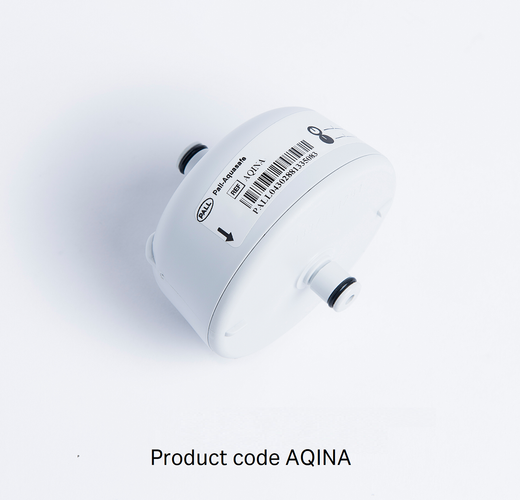
Point-of-Use water filter technology

SUMMARY:
Point-of-Use (POU) water filters reduce waterborne pathogens using either pleated membrane or hollow fiber technology. Pall Medical pleated membrane filters feature double-layer sterilizing-grade membranes validated by ASTM F838 for complete bacterial retention, while hollow fiber filters often achieve log reduction and may be prone to breakage under stress . Research comparing these technologies found membrane filters provided high microbial retention, while hollow fiber filters showed variable performance against Pseudomonas aeruginosa and Brevundimonas diminuta . The quality and retention performance required by a Point-of-Use filtration device should be risk assessed to ensure it is appropriate for the location, application and service life.
To learn more about the basics of point-of-use water filtration, see our What is a Point-of-Use water filter? blog article.
Point-of-Use (POU) water filters are designed to reduce or remove waterborne pathogens from the water distribution system. However, there are different POU water technologies available to do this. In this case, different technologies often mean different performance and different results.
Types of technology: Membrane versus hollow fibers
Pleated membrane POU water filters are often made of a pleated media membrane in which the stated pore size is uniform throughout. For example, if the filter claims to be a sterilizing-grade filter at 0.2 microns, this means that all water flowing through the pleated membrane of the filter must flow through these 0.2 micron pores.
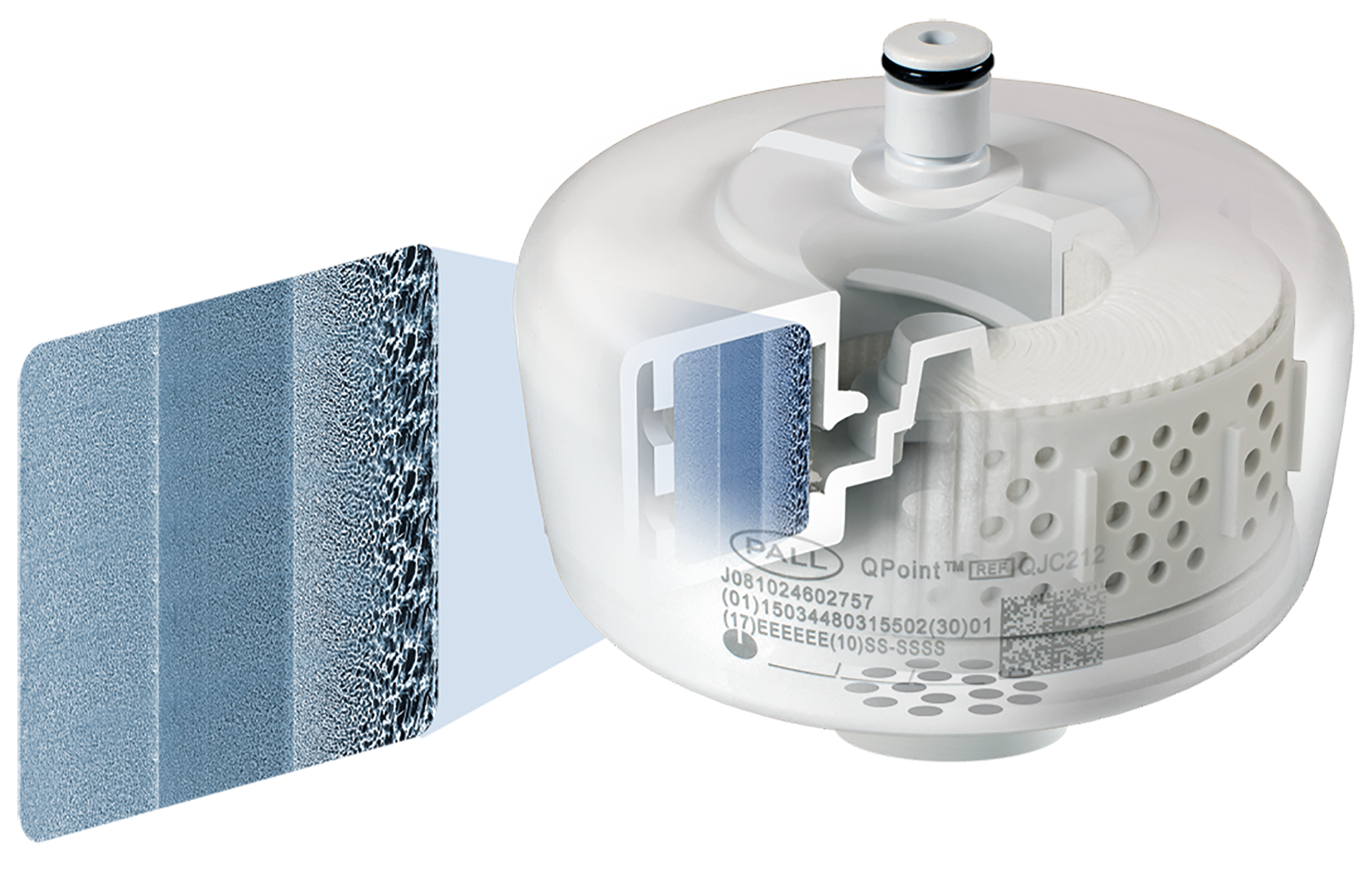
Fig 1. POU water filter with pleated media membrane
Hollow fiber POU filters are made of long, hollow tubes, much like a straw. These tubes have pores in their walls and the water typically passes from outside to inside the tubes.
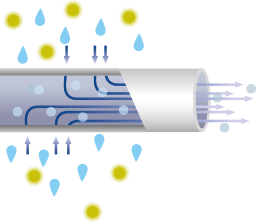
Fig 2. Close up of a single hollow fiber
Both technologies retain pathogens through physical filtration. Since there is no chemical adsorption component, these filters will not remove chlorine, chemicals, or minerals from the water.
How do they perform?
In use, both filters can reduce waterborne pathogen risks. They also both might feature prefiltration of some sort to remove larger particles and allow for longer filter life.
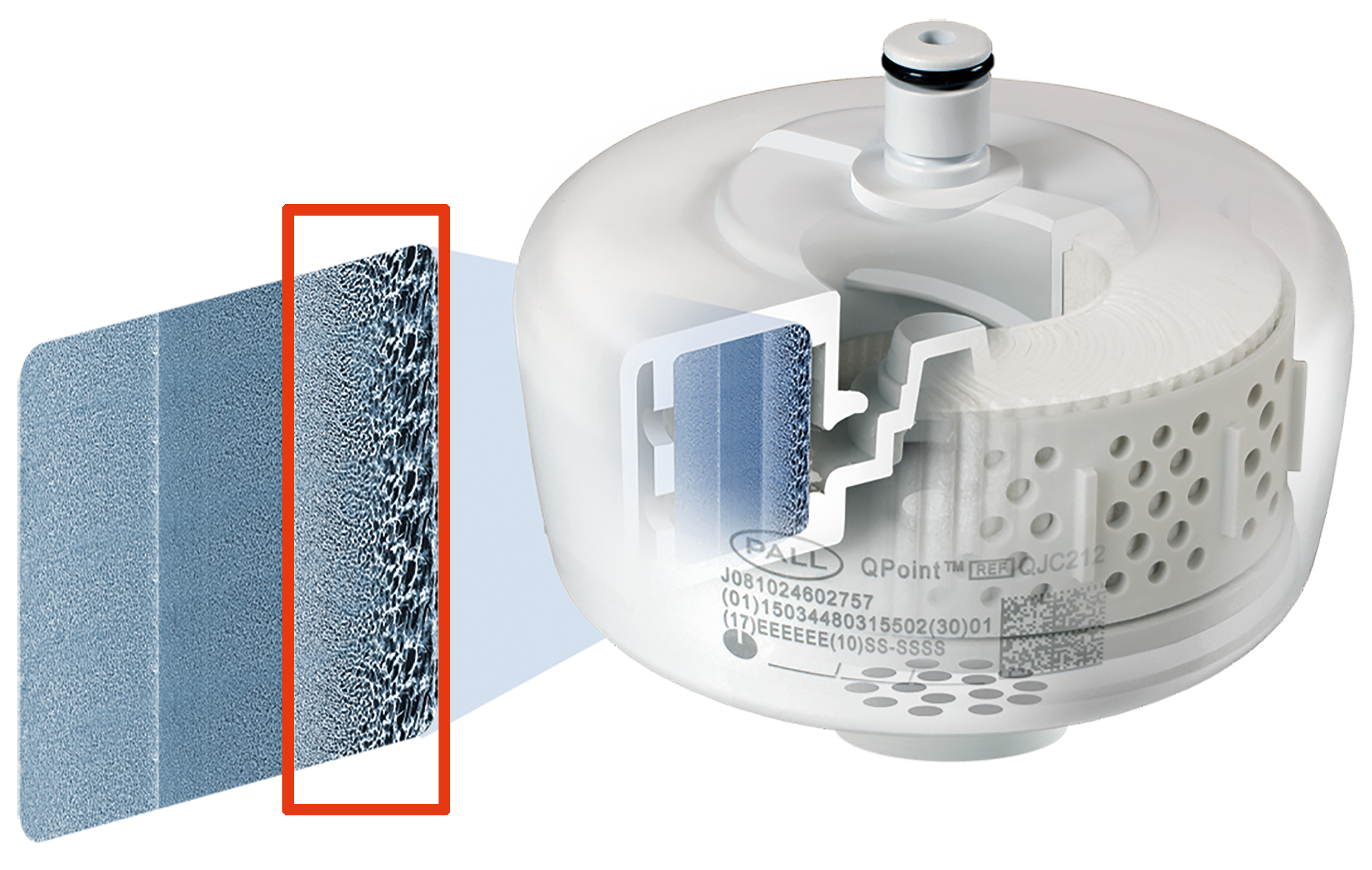
Fig 3.Example of an internal prefiltration layer
Membrane filters will often incorporate double-layer sterilizing-grade filter membranes, meaning when subjected to the ASTM F838 bacterial test, the filter must demonstrate complete retention of the challenge organism. In use, this is an advantage because it allows for the highest-degree of prevention at its outlet. However, membrane filters are more prone to filter blockage or reduced flow over time. This is because the filter removes all particles at and larger than its stated pore size. In areas with high particulate, this may mean reduced filter life due to low flow.
Hollow fiber filtration, when subjected to ASTM F838, may result in a log reduction of the challenge organism and thus would be considered a microbial filter. In use, this means the filter may reduce waterborne pathogens at the outlet but may not completely retain them all. Hollow fiber tubes are a single layer of filtration and, due to their flexibility and the possibility of mechanical defects, may also be more prone to breakage when subject to high particulate or other stresses. In the case of breakage, there would be nothing obvious to indicate that the filter was not performing as intended. The hollow fibers also typically incorporate a 2-part epoxy resin to secure the fibers to the housing. This resin can be a nutrition source for microbes and can be weakened in thermal cycling.
The two technologies have been compared for performance in research published by Totaro et al. in 2017. 1 In this study, a membrane faucet filter (filter C) was compared to a hollow fiber faucet filter (filter A) and a hollow fiber shower filter (filter B). The study found that: "There was a high capacity of microbial retention from filter C; filter B released only low Brevundimonas spp. counts; filter A showed poor retention of both [tested] microorganisms. [i.e. Pseudomonas aeruginosa and Brevundimonas diminuta]".
How to choose]
Ask yourself the following questions when considering POU water filtration: What type of patients are being cared for in this unit? Is there an ongoing concern about waterborne pathogens in the building? What do I know about my water quality?
It is also important to think critically about micron size. For example, when considering a 0.2 micron hollow fiber and 0.2 micron membrane filter, they may have different results during the ASTM F838 test and in use. Also, if a filter is rated lower than 0.2 microns, it does not necessarily indicate better performance, and could even be more prone to clogging. Thus, it is important to consider micron size, ASTM F838 results for both membrane and hollow fiber, and your facility when choosing filter technology.
Explore our water filtration solutions
FAQs
What are the main types of point-of-use water filter technologies?
Membrane POU water filters are made of a pleated media membrane in which the stated pore size is often uniform throughout. The media could be arranged in a single layer or multiple layers
Hollow fiber POU water filters are made of long, hollow tubes, much like a straw. These tubes have pores in their walls and the water typically passes from outside to inside the tubes.
What to consider when reviewing filter performance under ASTM F838?
This test method challenges a filter with a large standardized concentration of a bacteria, B. diminuta, per cm2 of media. The amount of bacteria measured in the water that has passed through the filter determines how well the filter retains bacteria.
- Microbial: the filter has retained some bacteria and is expressed as a log reduction
- Sterilizing-Grade: the filter has retained 100% of the bacteria
Which technology offers the highest microbial retention?
Comparison of these technologies has been the focus of several recent studies: In Yetiş et al., bacteria was found in 32% of water samples taken from the hollow fiber filters: “In this study setting, the use of hollow-fibre shower filters did not provide assurance of safety for patients in the shower environment...exposing some patients to high levels of organisms, with a risk of serious subsequent infection in immunosuppressed individuals.“2 In Totaro et al., hollow fiber filters showed growth of bacteria just after installation in water samples but the sterilizing-grade membrane filters showed no bacteria during the study in water samples.1
Do these filters remove chemicals or minerals?
No. Both technologies rely on physical filtration and do not remove chlorine, chemicals, or minerals.1
What factors should be considered when choosing a POU water filter?
Key considerations include patient vulnerability and risk, water quality, validated retention performance (e.g., ASTM F838), pore size, and the filter’s resilience under particulate loading
References
- Totaro M, Valentini P, Casini B, Miccoli M, Costa AL, Baggiani A. Experimental comparison of point-of-use filters for drinking water ultrafiltration. J Hosp Infect. 2017;96(2):172-176. doi.org/10.1016/j.jhin.2016.11.017.
- Yetiş, Ö., Ali, S., Karia, K., & Wilson, P.. Failure of a hollow-fibre shower filter device to prevent exposure of patients to Pseudomonas aeruginosa. The Journal of hospital infection, 130, 1–6.https://doi.org/10.1016/j.jhin.2022.08.007 (2022)
Author bio
Marissa Khoukaz - Former Business Development Manager— Hospital Water
Marissa was Business Development Manager for Hospital Water at Pall Medical, part of Cytiva and managed the prefiltration portfolio globally. She worked with high-risk units to reduce waterborne pathogen risk to patients.
Waterborne outbreak? We provide immediate support.
We ship within 24 hours (applicable to US only) - Call +1 774 556 9257.
Our water filters for healthcare